The 9th Annual Conference of the Portuguese Association of Energy Economics (APEEN 2026) took place on 19–20 March 2026 at the University of Aveiro, Portugal. The event was organised by GOVCOPP (Research Unit in Governance, Competitiveness and Public Policies) at the University of Aveiro, in collaboration with the BESIDE project. This international conference focused on the multiple dimensions of decarbonisation in the economy, addressing key topics such as investment, regulation, and social impacts in the transition towards sustainable, carbon-neutral systems.
BESIDE researchers and PhD students actively contributed to the conference through the presentation of their latest research.
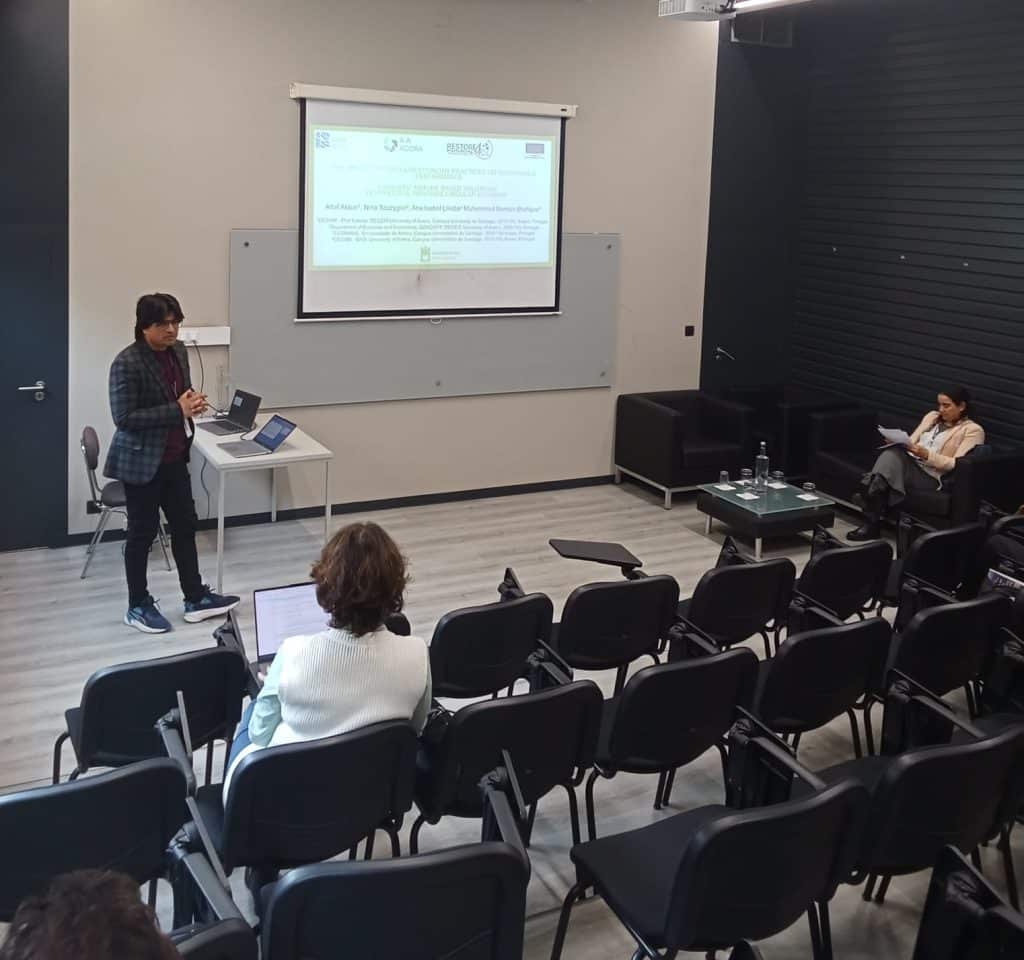
Altaf Akbar (PhD student, BESIDE) presented his work entitled “The Impact of Circular Economy Practices on Sustainable Performance: A Holistic Nature-Based Solutions Perspective.” The study examines how circular economy practices (CEPs) can enhance sustainable performance through nature-based solutions (NbS), with a particular focus on the Ria de Aveiro demonstration site. Using Structural Equation Modelling (SEM), the research identifies significant links between CEPs and improved resilience to coastal erosion and its social impacts, while addressing broader environmental challenges such as pollution, waste management, and biodiversity loss. The work provides actionable insights for scaling circular and sustainable practices. This research was co-authored by BESIDE members, Muhammad Noman Shafique and Ana Lillebø.
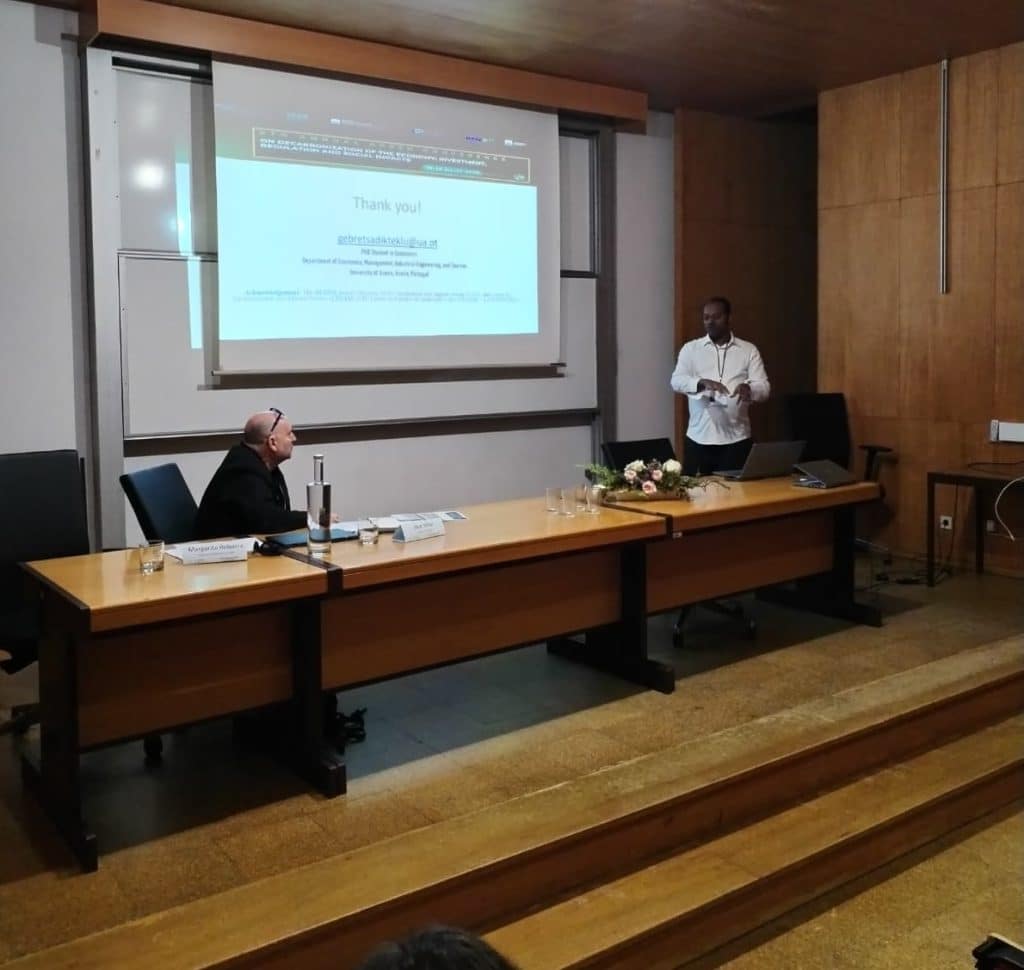
Teklu Wana (PhD student, BESIDE) presented his research titled “Circularity, Decarbonization, and Community in University Sustainability Reporting: A Comparative Analysis of Top 10 Green-Metric Universities for 2023 and 2024.” His study offers a cross-year comparative analysis of sustainability indicators in leading universities, focusing on circularity (waste and water systems), decarbonisation (energy and transport), and community engagement (education and research). The findings reveal that while universities show strong operational sustainability performance, there are still important gaps in systemic circularity, comprehensive carbon accounting, particularly Scope 3 emissions, and measurable community impact. The research contributes to advancing performance-driven sustainability assessment and proposes practical strategies to strengthen sustainability transitions in higher education institutions. This work was co-authored by BESIDE members, Zeeshan Arshad, Ana Lillebø, and Helena Vieira.
These contributions highlight the active role of BESIDE researchers in advancing interdisciplinary research on circular economy, decarbonisation, and sustainability, reinforcing the project’s mission to support evidence-based solutions for environmental and societal challenges.