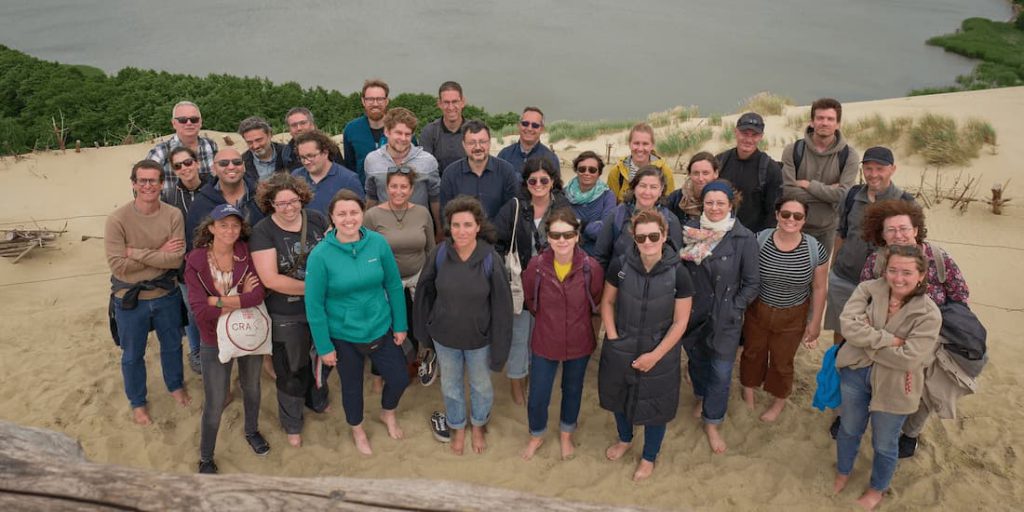
On 1 October, the University of Aveiro hosted a Forest Stakeholders Workshop, an initiative jointly organised by the CC4BIO, BESIDE, and RESTORE4Cs projects. The event gathered a diverse group of national forest and green stakeholders, providing an important space for dialogue, knowledge exchange, and collaborative thinking around the challenges currently facing forest management and sustainability in Portugal.
The session opened with a lecture by Nuno Gaspar de Oliveira (Natural Business Intelligence – NBI), who brought his extensive experience in land-use planning, natural capital assessment, and sustainability strategy to frame the discussion. Through a dynamic and engaging presentation, he introduced three key forest-related challenges and encouraged participants to explore potential pathways for building a more sustainable and resilient future.
A central theme of the workshop was the emerging relevance of Nature Markets in Portugal. Participants discussed how the economy and society fundamentally depend on the biosphere, with nature’s services estimated at €167 trillion per year, equivalent to 1.7 times the world’s GDP, highlighting the economic imperative of protecting natural systems.
The session further explored the evolving European context, including the European Commission’s newly released “Nature Credit Roadmap”, which outlines the development of a regulated biodiversity credit market expected to open in 2027. Unlike carbon credits, nature credits are grounded in demonstrable positive ecological impacts, such as habitat restoration and increased ecosystem resilience.
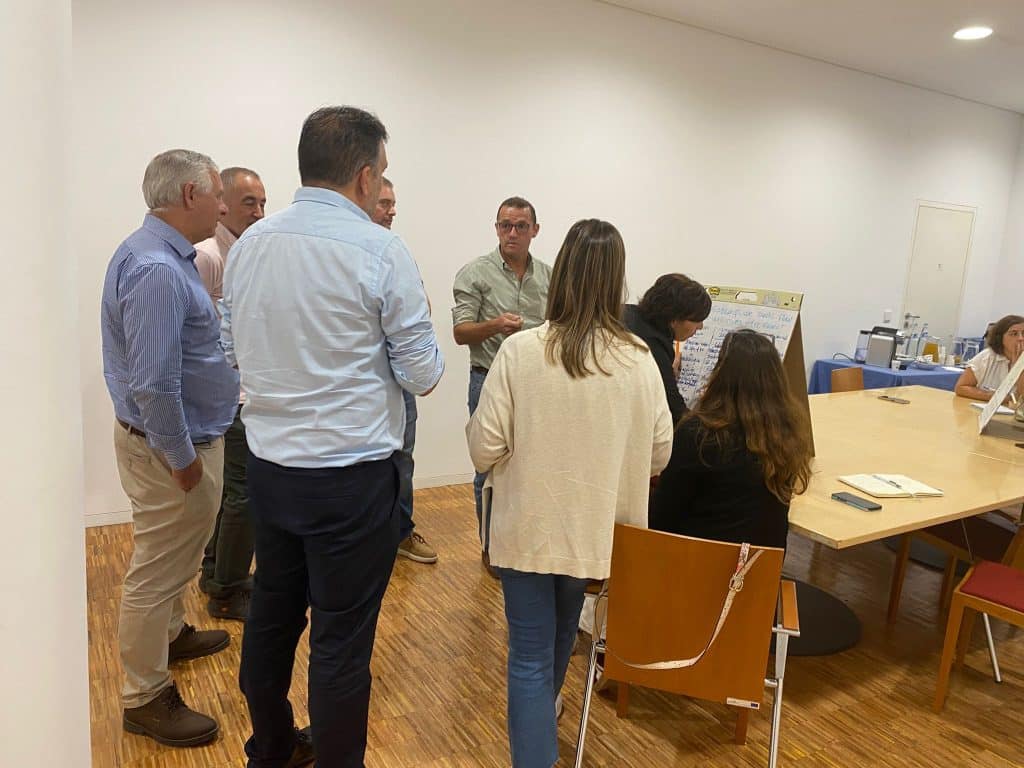
Stakeholders identified concrete opportunities for Portugal, from sustainable pine forest management to the creation of ecological mosaics in industrial plantations and the conservation of natural formations. These practices have the potential to become financeable nature assets, creating new incentives for sustainable forest management.
The workshop also highlighted the growing importance of innovative financing instruments, such as Green Bonds, Resilience Bonds, and Blended Finance, as mechanisms to unlock investment for conservation and restoration projects. Participants emphasised that scaling these opportunities will require strong collaboration, network-building, and the aggregation of small landowners, with associations and cooperatives playing a strategic role in creating collective value.
Looking ahead, the next 12 months will be critical for defining baselines, validating robust methodologies, and building transparent, credible and trustworthy markets capable of attracting investors while delivering tangible benefits for local communities and ecosystems.
The workshop generated lively interaction among participants from public administration, forestry associations, research institutions, NGOs, and regional stakeholders. The discussions underscored the importance of integrated approaches, evidence-based decision-making, and close cooperation between science, policy, and practice.
The BESIDE project extends its sincere thanks to Nuno Gaspar de Oliveira, as well as to all participants and partners who contributed to this inspiring session. We look forward to continuing this collaborative effort to turn vision into action.